


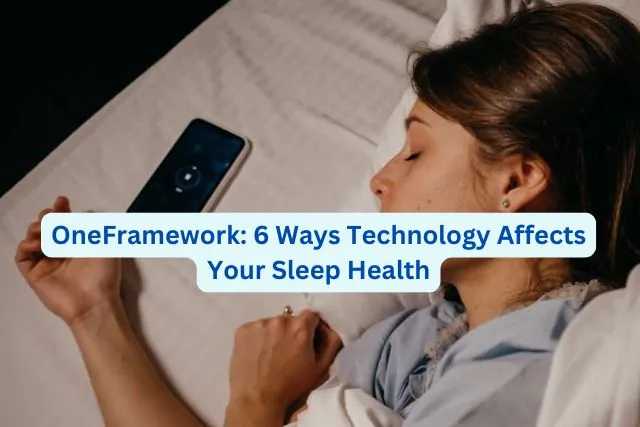
Technology has become an essential part of everyone’s life, and we are all bound from morning to night using smart devices. You might have heard about OneFramework’s 6 Ways Technology Affects Your Sleep Health. Explore how digital devices and modern technologies can impact the quality and duration of sleep.
While technology offers convenience and connectivity, it also plays a significant role in disturbing our sleep patterns. Understanding these effects can help individuals make informed choices to improve their sleep habits. You should also learn about future healthcare technology.
OneFramework 6 Ways Technology Affects Your Sleep Health
1. Blue Light Exposure Disrupts Melatonin Production
One of the most common ways technology affects sleep is through blue light exposure. Devices like smartphones, tablets, and computers emit blue light that interferes with the body’s natural production of melatonin, the hormone responsible for regulating sleep. Studies show that blue light exposure before bedtime reduces melatonin levels, making it difficult to fall asleep and stay asleep.
Impact:
- Difficulty falling asleep
- Reduced sleep quality
- Delayed sleep onset
Solution:
- Use blue light-blocking glasses while using screens at night.
- Enable night mode or blue light filters on devices.
- Limit screen time at least one hour before bedtime.
2. Increased Brain Activity Due to Digital Engagement
Using technology right before bed often stimulates the brain, making it difficult to relax and transition into sleep mode. Activities such as scrolling through social media, watching videos, or responding to emails keep the mind active and alert. This increased mental activity delays the onset of sleep and reduces overall sleep duration.
Impact:
- Difficulty unwinding
- Increased stress and anxiety
- Poor sleep efficiency
Solution:
- Create a technology-free wind-down routine before bed.
- Engage in calming activities such as reading a book or meditation.
- Set boundaries for device usage during the evening.
3. Notifications and Alerts Disturbing Sleep Cycles
Frequent notifications, buzzing, and alerts from smartphones or other devices can disrupt the natural sleep cycle. Even when in silent mode, vibrations or screen light from incoming messages or notifications can awaken a person from deep sleep stages.
Impact:
- Fragmented sleep patterns
- Increased night-time awakenings
- Reduced REM sleep
Solution:
- Put devices on ‘Do Not Disturb’ mode during sleep hours.
- Keep devices away from the bed or in another room.
- Use a traditional alarm clock instead of a smartphone.
4. Reduced Sleep Duration Due to Screen Addiction
Excessive use of technology often leads to screen addiction, causing individuals to stay up longer than intended. Binge-watching TV shows, playing video games, or endlessly scrolling on social media can extend wakefulness and shorten sleep duration.
Impact:
- Shortened sleep duration
- Increased sleep deprivation
- Risk of developing chronic sleep disorders
Solution:
- Set screen time limits, especially during the evening.
- Establish a consistent bedtime routine.
- Use apps that monitor and control screen time usage.
5. Artificial Light Alters Circadian Rhythms
Artificial light from electronic devices can interfere with the body’s internal clock or circadian rhythm. Circadian rhythms regulate the sleep-wake cycle, and prolonged exposure to artificial light in the evening can shift the natural sleep schedule, making it difficult to fall asleep and wake up at appropriate times.
Impact:
- Shifted sleep schedules
- Poor sleep-wake balance
- Increased daytime fatigue
Solution:
- Dim the lights and use warm, low-intensity lighting before bedtime.
- Avoid using bright screens 1-2 hours before bed.
- Maintain a regular sleep schedule to stabilize circadian rhythms.
6. Technology-Induced Stress and Anxiety Affecting Sleep
Constant connectivity through technology can lead to stress and anxiety, both of which have a direct impact on sleep quality. Social media comparisons, work-related emails, and exposure to negative content can contribute to increased stress levels, making it harder to relax and fall asleep.
Impact:
- Increased stress and anxiety levels
- Insomnia and difficulty staying asleep
- Poor emotional regulation and mental fatigue
Solution:
- Practice relaxation techniques such as deep breathing or mindfulness.
- Reduce exposure to negative content before bedtime.
- Establish a digital detox routine in the evenings.
How to Minimize the Negative Effects of Technology on Sleep
Set a Digital Curfew: Establish a no-screen time at least 1-2 hours before bedtime.
Use Technology Mindfully: Limit exposure to stimulating content and practice moderation.
Incorporate Relaxation Techniques: Engage in calming activities that help the mind and body unwind.
Create a Sleep-Friendly Environment: Keep the bedroom cool, dark, and free from digital distractions.
Invest in Blue Light Filters: Use apps or accessories that reduce blue light emission from screens.
Conclusion
Understanding OneFramework 6 ways technology affects your sleep health empowers individuals to take charge of their digital habits and improve their sleep quality. While technology enhances many aspects of our lives, it is essential to establish a balance that protects our sleep health. By minimizing blue light exposure, managing screen time, and creating a relaxing bedtime routine, you can ensure that technology does not hinder your journey to a restful and restorative sleep.
By adopting mindful technology habits, you can protect your sleep health and improve overall well-being.
Frequently Asked Questions (FAQ’s)
1. How does blue light from technology affect sleep?
Blue light emitted from devices reduces melatonin production, making it difficult to fall asleep and stay asleep.
2. Can using a smartphone in bed disrupt sleep patterns?
Yes, engaging with a smartphone before bed can increase brain activity and delay the onset of sleep.
3. Is it okay to keep my phone next to me while sleeping?
It’s best to keep your phone away from the bed or switch it to ‘Do Not Disturb’ mode to avoid disturbances.
4. How can I reduce the negative effects of technology on my sleep?
Limit screen time before bed, use blue light filters, and establish a bedtime routine free from devices.
5. Does screen addiction affect sleep health?
Yes, screen addiction often leads to late-night device usage, reducing sleep duration and affecting sleep quality.