


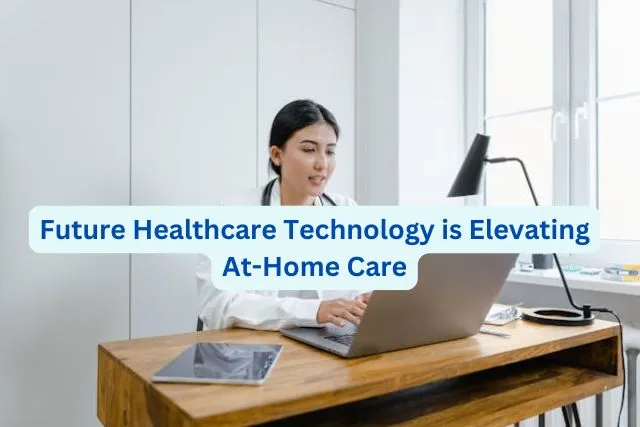
The healthcare industry has witnessed a significant transformation in recent years. Technology is changing the way of treatment and helping patients at home. More people prefer to take treatments in the comfort of their homes. Future healthcare technology is elevating at-home care from remote monitoring to AI-powered diagnostics.
In this article, we will discuss everything about healthcare technology and how it is going to elevate at-home care, the benefits, and what the future holds.
The Growing Importance of At-Home Care
Old agers, disabled persons, and due to increasing healthcare costs, the demand for at-home care has increased over the years. Patients with chronic illnesses, prefer to take treatments at home rather than the long hospital stays.
At-home care patients feel comfort and it leads to better health outcomes and reduced hospital bills. According to a report by Grand View Research, the global home healthcare market is expected to reach $515.6 billion by 2028. Future healthcare technology is set to play a critical role in meeting this demand.
How Future Healthcare Technology is Elevating At-Home Care
1. Telemedicine and Virtual Consultations
Telemedicine has become a cornerstone of at-home care, allowing patients to connect with healthcare professionals through video calls, phone calls, mobile applications, and IoT apps in healthcare. With the integration of artificial intelligence (AI) and machine learning, virtual consultations are becoming more precise and personalized.
- AI-Powered Diagnostics: AI algorithms can analyze patient data to provide faster and more accurate diagnoses during virtual consultations.
- Remote Prescription Management: Physicians can prescribe medications remotely and adjust treatment plans based on real-time patient feedback.
Future Impact:
As 5G networks become more widespread, the quality of virtual consultations will improve, ensuring seamless communication between patients and healthcare providers.
2. Remote Patient Monitoring (RPM) and Wearable Devices
Remote Patient Monitoring (RPM) technology allows healthcare providers to monitor a patient’s vital signs, activity levels, and health status in real-time. Devices such as smartwatches, fitness trackers, and IoT-enabled medical devices continuously collect data, enabling timely intervention.
- Continuous Monitoring: Wearable devices monitor heart rate, blood pressure, oxygen levels, and glucose levels, alerting healthcare providers to any abnormalities.
- Early Detection of Complications: RPM systems can detect potential health risks early, preventing emergency situations.
Future Impact:
With improvements in wearable sensor technology and AI-driven analytics, future RPM systems will become more intuitive, enabling more accurate predictions and personalized treatment plans.
3. Artificial Intelligence (AI) and Machine Learning (ML) in Personalized Care
AI and ML algorithms are revolutionizing at-home care by analyzing large datasets to identify patterns and trends in patient health. This enables personalized care plans tailored to individual needs.
- Predictive Analytics: AI can predict potential health issues based on patient history, allowing proactive intervention.
- Virtual Health Assistants: AI-powered virtual assistants provide 24/7 support, answer medical queries, and remind patients to take medications.
Future Impact:
AI’s role in predictive healthcare is expected to grow, reducing hospital visits by preventing complications before they occur.
4. Internet of Medical Things (IoMT) and Smart Home Integration
The Internet of Medical Things (IoMT) refers to the connected network of medical devices and applications that communicate with healthcare systems through secure networks. IoMT-enabled devices can seamlessly integrate with smart home systems to create a holistic healthcare environment.
- Automated Alerts and Notifications: IoMT devices can send alerts to caregivers and healthcare providers when patient data indicates a potential health issue.
- Smart Home Integration: Voice-activated devices can assist patients with mobility issues, enabling hands-free communication and control of home environments.
Future Impact:
The integration of IoMT with smart home technology will provide a safer and more comfortable living environment for patients, particularly the elderly.
5. Blockchain Technology for Secure Patient Data Management
As at-home care relies heavily on digital platforms, ensuring the security and privacy of patient data is paramount. Blockchain technology offers a secure, decentralized system for storing and managing patient information.
- Enhanced Data Security: Blockchain prevents unauthorized access and ensures that patient data remains tamper-proof.
- Seamless Data Sharing: Blockchain enables secure sharing of patient data among healthcare providers, improving care coordination.
Future Impact:
Blockchain’s potential in-securing medical data will increase patient trust and facilitate better communication between healthcare providers.
Benefits of Future Healthcare Technology in At-Home Care
Increased Accessibility
Technology bridges the gap between patients and healthcare providers, making quality care accessible to those in remote or underserved areas.
Cost Savings
At-home care reduces hospital readmissions and emergency visits, lowering overall healthcare costs.
Improved Patient Experience
Patients receive personalized care in a familiar and comfortable environment, leading to better adherence to treatment plans and improved outcomes.
Better Chronic Disease Management
Continuous monitoring and predictive analytics enable timely intervention, reducing complications for patients with chronic conditions.
Challenges and Considerations
While future healthcare technology offers immense potential, certain challenges need to be addressed:
- Data Privacy and Security: Ensuring patient data remains secure and compliant with regulations is critical.
- Digital Literacy: Patients and caregivers may require training to effectively use advanced healthcare technologies.
- Integration with Existing Systems: Seamlessly integrating new technologies with existing healthcare infrastructure is essential for optimal outcomes.
What Does the Future Hold?
The future of at-home care lies in the seamless integration of AI, IoMT, and telemedicine into everyday healthcare. As these technologies continue to evolve, they will enhance the quality of at-home care by enabling real-time monitoring, personalized treatment plans, and better communication between patients and providers.
By 2030, we can expect AI-powered virtual health assistants, predictive analytics, and smart home environments to become standard components of at-home healthcare, significantly improving patient outcomes and reducing healthcare costs.
Conclusion
Future healthcare technology is elevating at-home care by making healthcare more accessible, personalized, and efficient. From telemedicine and RPM to AI-powered diagnostics and IoMT integration, these innovations will enhance the quality of care delivered in the home environment. As technology continues to evolve, patients and healthcare providers alike can look forward to a future where at-home care is safer, smarter, and more effective.
By staying informed about these emerging technologies, both patients and caregivers can reap the benefits of improved healthcare outcomes and an enhanced quality of life.
Frequently Asked Questions (FAQ’s)
1. What is Remote Patient Monitoring (RPM) and how does it work?
RPM uses connected devices to collect and transmit patient data, allowing healthcare providers to monitor vital signs and health status remotely. It enables early detection of health issues and timely intervention.
2. How does AI improve at-home care?
AI enhances at-home care by analyzing patient data, predicting potential health risks, and providing personalized care plans. Virtual health assistants also offer continuous support and medication reminders.
3. Is telemedicine secure for sensitive patient information?
Yes, telemedicine platforms use encryption and secure protocols to protect patient data. However, blockchain technology offers an additional layer of security for managing sensitive information.
4. What role does IoMT play in future healthcare?
IoMT connects medical devices to healthcare systems, enabling real-time data collection and analysis. This helps in early diagnosis, personalized care, and improved patient safety.
5. Can wearable devices replace in-person doctor visits?
While wearable devices provide valuable health insights, they cannot fully replace in-person visits. However, they complement traditional healthcare by enabling continuous monitoring and early detection of health issues.